PrecisieWeeg
Written by: Team PrecisieWeeg

The Future of Weighing: Automation in Warehouses

Automation Logistics Industrial Scales

The logistics sector is on the brink of a revolution, with automated weighing systems playing a central role in efficiency and accuracy.
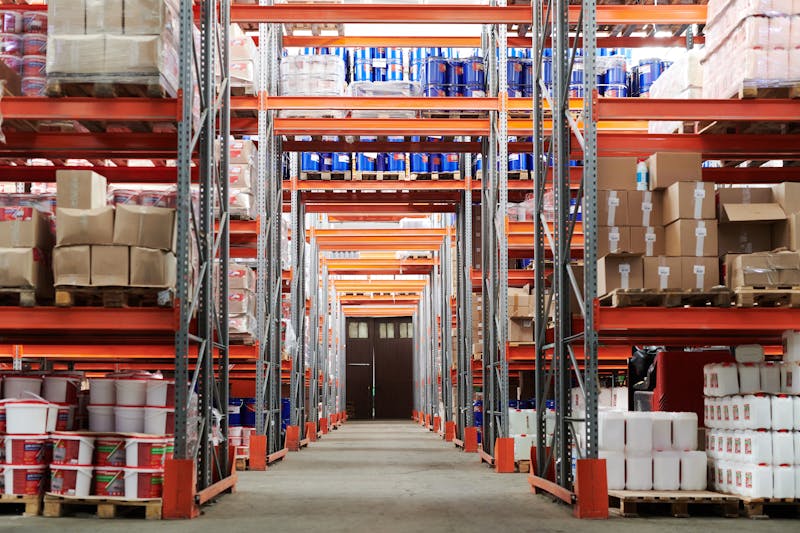
Automated warehouse with conveyor belts and robots
Automated weighing stations integrated into a warehouse system.

From Manual to Integrated

Where traditional warehouse weighing was often a manual, interrupting action, modern systems are fully integrated into the production or order picking line. A package is weighed while it moves on the conveyor belt, without delay. This in-line weighing is crucial for high-throughput environments such as e-commerce distribution centers.

The Role of Robust Steel and Sensors

The hardware requirements are strict. Load cells made of stainless steel offer not only hygiene but also the durability to withstand constant vibrations, temperature fluctuations, and dust. Combined with high-quality sensors, they guarantee an accuracy of ±1 gram, even at speeds of thousands of packages per day.

"The accuracy of a weighing system determines not only operational costs but also customer satisfaction. An error of 100 grams on thousands of shipments has a significant financial impact."

Data Integration: The Real Advantage

The biggest advantage of automated weighing lies in data integration. Weight data is directly linked to the Warehouse Management System (WMS). This enables managers to:

  • Optimize packaging materials (such as cardboard boxes) based on actual weights.
  • Automatically calculate shipping costs and customs declarations.
  • Detect deviations in real-time, which can indicate errors in order picking or production.

Close-up of a digital scale display in an industrial setting
Digital display of an integrated weighing system with direct data output.

Challenges and Considerations

Implementation requires careful planning. Calibration must occur regularly and often automatically. The systems must be compatible with existing infrastructure. The initial investment can be significant, but the ROI manifests in lower labor costs, reduced errors, and faster order processing.

Conclusion: The future of warehouse weighing is autonomous, accurate, and data-driven. For companies competing on speed and accuracy, the transition from manual to automated precision weighing systems is not a luxury, but a necessity.

Frequently Asked Questions about Industrial Weighing Systems

Answers to your questions about precision weighing for logistics and warehouse management.

What is the difference between a calibrated and a non-calibrated industrial scale?

A calibrated scale, like the ones we supply, is officially approved for commercial transactions and meets strict legal standards (MID/NAB). These are mandatory for logistics invoicing or parcel shipping. Non-calibrated scales are suitable for internal use, such as inventory control, but not for legally recognized weight declarations. Our systems for post offices are always calibrated.

Can your scales be integrated into an existing production line?

Yes, absolutely. Our precision weighing systems are modularly built and often equipped with standard communication interfaces (such as RS232, Ethernet, Profibus). This allows them to be easily connected to PLCs, ERP software, or sorting machines in your warehouse environment. We advise on the best integration for a seamless logistics process flow.

Are your stainless steel scales resistant to a humid warehouse environment?

Our industrial scales made of stainless steel (AISI 304 or 316) are specially designed for challenging conditions. They have a high IP rating (e.g., IP66/IP67) against dust and water. This makes them ideal for humid spaces, cold storage facilities, or production lines that are regularly cleaned with water or chemicals.

How do I determine the right scale for weighing cardboard boxes with varying contents?

The choice depends on the maximum weight (capacity) and the smallest weight change you need to detect (division value). For boxes, we recommend a platform scale with high capacity (e.g., 150 kg) and a robust, flat platform. Our digital systems can automatically recognize tare functions (zeroing of the packaging) and weight classes, which is essential for efficient shipping.

What is the typical recalibration period for a warehouse weighing system?

For calibrated systems, an annual re-verification is legally required. For critical internal precision measurements, we recommend a semi-annual or quarterly check, depending on the frequency of use and mechanical load. We offer maintenance contracts to guarantee the accuracy of your warehouse equipment.

Do you have another, specific question about your logistics weighing needs?

Contact us via info@mygoalweight.com or call (012) 9734005.

Our office is located at Haanpad 1-1.

Cookie Preferences

We use cookies to improve your experience on our website. By clicking "Accept", you agree to the use of all cookies. You can manage your preferences at any time.

EN
NL EN